East Bengaluru Real Estate Growth: Why 2026 Could Be the Beginning of the Next Investment Cycle

East Bengaluru Real Estate Growth: Why 2026 Could Be the Beginning of the Next Investment Cycle
If someone had purchased land in Whitefield or along Old Madras Road in the early 2000s, few would have imagined that these areas would become some of Bengaluru’s most valuable real estate destinations.
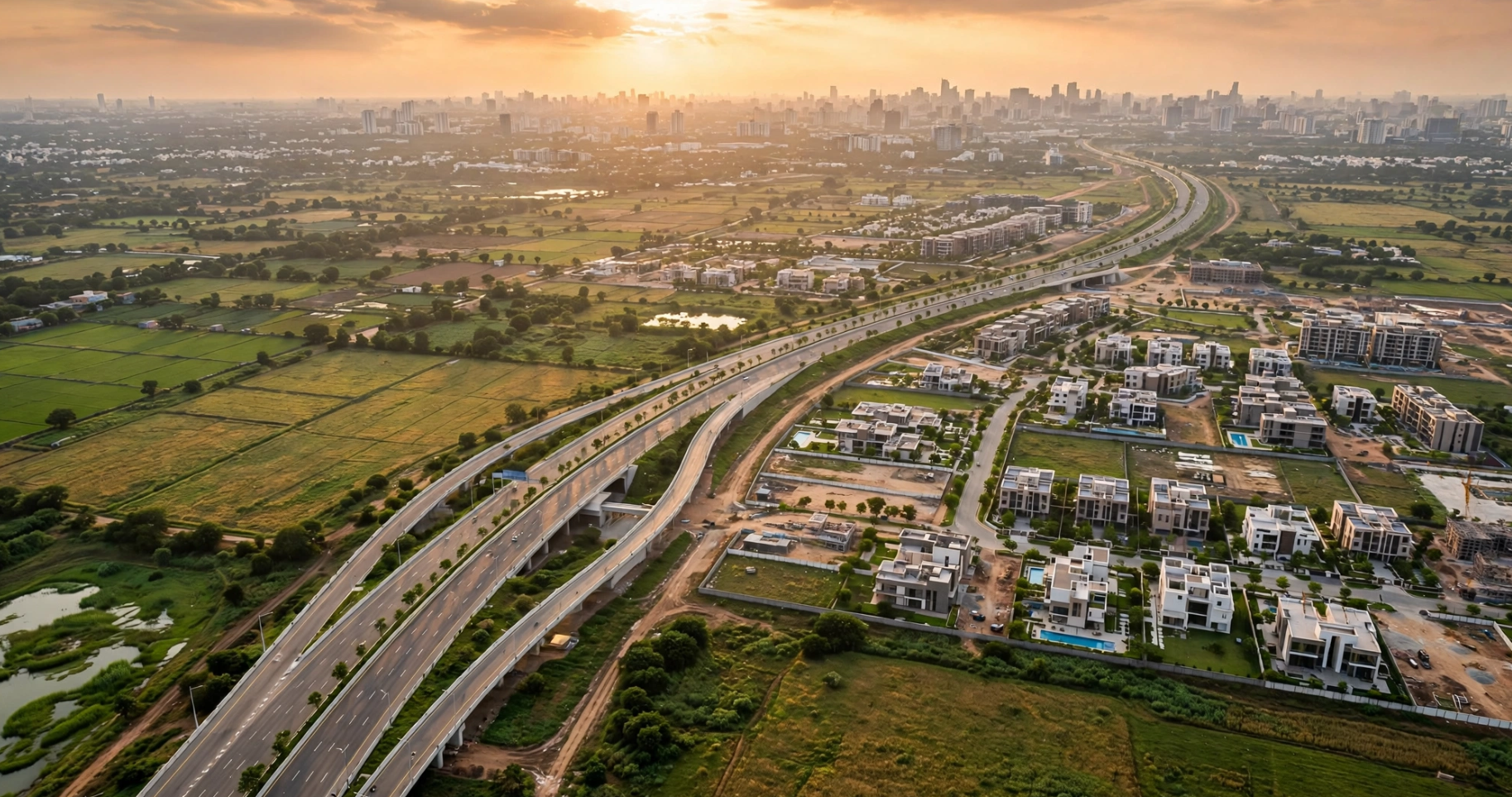
Back then, East Bengaluru consisted of large open layouts, agricultural land, and a handful of developing residential neighborhoods. Today, the region has transformed into one of India’s largest technology and residential corridors, driven by employment, infrastructure, connectivity, and sustained urban growth.
As we move into 2026, the question for investors is no longer whether East Bengaluru has grown. The more important question is:
Where will the next phase of growth happen?
East Bengaluru: From Then to Now
Around 2000
* Whitefield was still emerging. * ITPL had just begun attracting multinational companies. * Limited road infrastructure. * No Metro connectivity. * Large land parcels were available at relatively affordable prices.
In 2026
* Whitefield is one of Bengaluru’s leading IT and residential destinations. * Metro connectivity has transformed daily commuting. * Major employment hubs include Whitefield, ITPL, KR Puram, Mahadevapura, Bellandur, Marathahalli, and the Outer Ring Road. * International schools, hospitals, malls, and commercial developments have created a complete urban ecosystem.
This transformation did not happen overnight. It was driven by decades of investment in employment and infrastructure.
Land Value: Then, Now and the Road Ahead
One of the strongest indicators of East Bengaluru’s transformation has been land appreciation.
Although prices vary by exact location, approvals, and road access, the trend is evident.
Period Approximate Land Values Early 2000s ₹300–₹2,000 per sq.ft. in many developing eastern locations Around 2010 ₹2,500–₹6,000 per sq.ft. across key corridors Around 2026 ₹8,000–₹30,000+ per sq.ft. in established micro-markets such as Whitefield, KR Puram and surrounding areas
The highest appreciation occurred where four factors came together:
* Employment * Infrastructure * Connectivity * Residential demand
Areas without these fundamentals often experienced much slower growth.
Why East Bengaluru Continues to Grow
The strength of East Bengaluru lies in its economic ecosystem.
Major employment zones continue to support demand from professionals working in:
* Whitefield * ITPL * Mahadevapura * Outer Ring Road * Bellandur * Marathahalli * Sarjapur Road
This employment base creates demand for housing, rentals, retail, offices, schools, healthcare, and hospitality.
Real estate follows jobs—not the other way around.
The Infrastructure Powering the Next Phase
Infrastructure has become the biggest catalyst for East Bengaluru.
Several developments are expected to influence accessibility and investment sentiment over the coming years, including:
* Expansion of the Namma Metro network. * Upgrades to the Outer Ring Road corridor. * Satellite Town Ring Road (STRR). * Peripheral Ring Road initiatives and related road improvements. * Ongoing widening of Old Madras Road and connecting highways. * Better connectivity towards Hoskote and Budigere Cross. * Continued improvements around KR Puram. * Smart road and junction upgrades. * Enhanced rail connectivity.
Each project has the potential to improve commuting efficiency and expand the practical residential catchment for East Bengaluru.
East to South Bengaluru: A Stronger Growth Corridor
One of the most significant changes over the next decade is expected to be stronger integration between East and South Bengaluru.
The technology corridor increasingly connects:
* Whitefield * KR Puram * Mahadevapura * Marathahalli * Bellandur * Outer Ring Road * Sarjapur Road * Electronic City
As Metro expansion, upgraded roads, and new transport links improve travel between these employment centres, buyers may gain more flexibility in choosing where to live while remaining connected to major workplaces.
This broader East–South corridor could support continued residential demand across multiple micro-markets.
SWIFT City: A New Growth Driver
Another development attracting attention is the proposed SWIFT City (Startup, Workspaces, Innovation, Finance & Technology City) planned near the eastern growth belt.
If developed as envisioned, it could:
* Generate new employment opportunities. * Attract technology and innovation companies. * Increase commercial activity. * Support residential demand in surrounding areas. * Create fresh demand for retail, hospitality, and social infrastructure.
Large employment projects typically create long-term real estate demand, although their pace and impact depend on execution and market conditions.
Where Could Future Growth Emerge?
While Whitefield has matured, several surrounding corridors continue to attract investor interest because of ongoing infrastructure and land availability.
These include:
* Budigere Cross * Budigere Road * Hoskote * Greater Whitefield * Old Madras Road * Varthur * Gunjur * Kadugodi * Seegehalli *soukya road
Each micro-market offers a different mix of pricing, connectivity, rental demand, and future development potential. Investors should evaluate individual projects rather than relying on area-wide assumptions.
Future Price Outlook: What Can Investors Expect?
No one can accurately predict future property prices, and real estate performance depends on factors such as project quality, legal approvals, infrastructure delivery, economic conditions, and the purchase price.
However, if East Bengaluru continues to benefit from:
* Strong employment growth, * Successful infrastructure execution, * Improved Metro connectivity, * Expanding social infrastructure, and * Sustained housing demand,
well-located properties may continue to see healthy long-term demand. Mature areas may experience steadier appreciation, while selected emerging corridors could offer greater upside alongside higher uncertainty.
For investors entering from 2026 onward, patience and careful location selection are likely to be more important than chasing the lowest price or the latest marketing trend.
The Chara Hovi Investment Approach
At Chara Hovi Realty Solutions, we encourage buyers to look beyond advertisements and focus on fundamentals.
Before investing, ask:
* Where are the jobs? * What infrastructure is actually under construction? * How strong is rental demand? * How many competing projects are launching nearby? * What will make someone want to buy this property from you in the future?
The best investments are usually supported by a combination of employment, connectivity, livability, and long-term demand—not speculation alone.
East Bengaluru’s journey from 2000 to 2026 is one of Bengaluru’s greatest urban success stories.
The next chapter may not be about finding “the next Whitefield.” Instead, it is about identifying the next micro-markets where infrastructure, employment, connectivity, and population growth are beginning to align.
For buyers planning to invest from 2026 onward, the opportunity lies in making informed decisions based on research, realistic expectations, and long-term fundamentals.