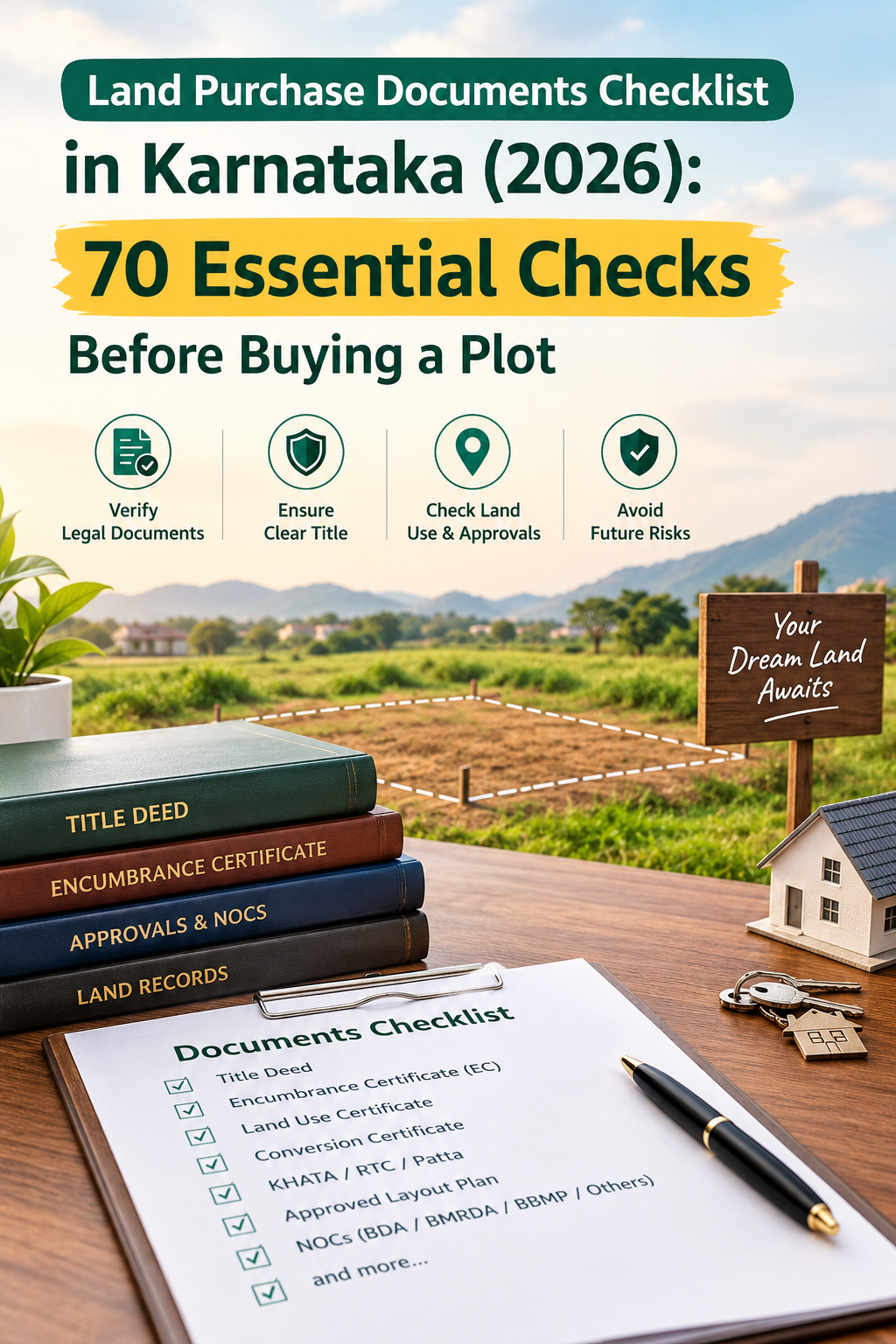
Is Your Land Safe If the Neighbouring Property Is Involved in a Court Case?

Is Your Property Safe If the Neighbouring Land Is Involved in a Court Case?
A Simple Guide to Understanding Property Legal Risks and Protecting Your Investment
Buying land is one of the biggest financial decisions you can make. Before investing, you need to ensure that the property has a clear ownership history, legally identifiable boundaries and secure access.
But what happens if the land next to your property is involved in a court case, ownership dispute or document-related issue?
Does a legal dispute involving neighbouring land automatically affect your property?
No. A dispute involving neighbouring land does not automatically make your property legally unsafe. However, if the two properties share ownership records, disputed boundaries, overlapping survey numbers or access rights, the dispute could affect your investment.
Understanding the connection between the two properties is essential before buying land or deciding that your existing property is safe.
1. When Can a Neighbour's Property Dispute Affect Your Land?
A legal dispute involving neighbouring land may affect your property in certain circumstances.
A. Common Parent Documents
If your property and the neighbouring property originated from the same larger parcel of land, a dispute over the original ownership or parent documents could potentially affect both properties.
For example, a person may claim that a larger parcel of land was transferred illegally and that the disputed parcel includes your plot as well as the neighbouring property.
What you should do: Verify the parent deeds, ownership history and registered documents relating to your specific property.
B. Overlapping Survey Numbers or Unclear Boundaries
Sometimes, neighbouring properties have overlapping survey records, incorrect measurements or disputed boundaries.
This can create uncertainty about the actual extent and location of your land.
What you should do: Check the relevant survey records, approved layout plan, property measurements and boundary details. If necessary, seek an official land survey.
C. Ownership or Title Disputes
A neighbouring landowner may be involved in a dispute over ownership, inheritance, fraudulent documents or an earlier property transaction.
Such a dispute becomes relevant to your property if the claim also covers your land or challenges a document in your ownership history.
What you should do: Have a qualified property lawyer examine your title documents and determine whether the dispute affects your property's ownership.
D. Disputes Over Roads and Access
Your property may have its own ownership documents but depend on a common road or a passage through neighbouring land.
If the road's ownership, right of way or legal access is disputed, reaching your property could become difficult.
What you should do: Verify the legal status of the approach road, registered access rights, applicable layout approvals and any relevant court orders.
Important: A neighbouring property's court case matters to your land only to the extent that the underlying dispute affects your ownership, boundaries, access or other legal rights. The actual facts and court documents must be examined before drawing a conclusion.
2. Five Important Documents to Verify Before Buying Land
Do not rely only on the sale deed or the assurances given by the seller. A proper property verification process should examine the relevant documents together.
1. Registered Sale Deed
The sale deed records the transaction through which you purchased or intend to purchase the property.
Check:
* The seller's legal authority to sell. * The property's survey number, measurements and boundaries. * The relationship between the property description and the actual land. * Whether the document matches the relevant title records.
2. Parent Deed and Ownership History
The parent deed and earlier title documents help establish how ownership passed from previous owners to the current seller.
Check:
* The chain of ownership. * Whether previous transfers are properly documented. * Whether any ownership gaps or competing claims exist. * Whether the property is connected to any known title dispute.
A qualified property lawyer should determine which earlier documents are necessary to establish a reliable title history.
3. Encumbrance Certificate (EC)
An Encumbrance Certificate helps identify registered transactions and encumbrances recorded against the property for the period covered by the search.
Check for relevant registered sales, mortgages and other recorded transactions.
Remember: An EC does not establish every aspect of legal ownership and may not reveal all pending litigation, unregistered claims or other legal risks.
4. Survey Records, Property Sketch and Boundaries
Survey records and applicable property sketches help identify the land's location, extent and boundaries.
Check:
* The survey number and subdivision details. * The recorded measurements and extent. * The actual boundaries on the ground. * Any apparent overlap with neighbouring land. * Whether the relevant layout or subdivision approvals are in order.
Where necessary, request verification by the appropriate survey authority.
5. RTC, Mutation and Khata Records
Depending on the type and location of the property, relevant records may include the Record of Rights, Tenancy and Crops (RTC), mutation records and Khata or municipal property records.
These records serve different administrative and revenue purposes.
Check whether the available records correspond with the property description, ownership documents and applicable land records.
Important: RTC, mutation and Khata records do not, by themselves, conclusively establish legal title. Their significance depends on the property type and applicable law.
One More Essential Check: Court Cases and Court Orders
In addition to these five categories of documents, investigate whether any pending court case, injunction or other judicial order affects your property.
Where a dispute is known to exist, verify:
* The case number and court. * The parties involved. * The survey numbers and property descriptions mentioned in the pleadings. * Whether your property or title documents are included in the dispute. * Whether any interim order restricts a sale, construction, possession or access.
A property lawyer should review the actual case records and relevant orders. Do not assume that a property is affected merely because a neighbouring landowner is involved in litigation.
3. How Can You Protect Your Land Investment?
Whether you are planning to purchase a plot or already own land, take these precautions.
Step 1: Verify the ownership history.
Examine the sale deed, parent documents and relevant earlier transactions to identify possible gaps or competing claims.
Step 2: Confirm the property's identity and boundaries.
Compare the registered documents with the survey records, approved layout plan and physical boundaries.
Step 3: Investigate known legal disputes.
If neighbouring land is involved in litigation, obtain the relevant case details and determine whether the dispute concerns your property, shared documents, boundaries or access rights.
Step 4: Verify approvals and applicable land-use requirements.
Check the relevant planning authority approvals, land-use status and other permissions applicable to the particular property.
Step 5: Obtain an independent legal opinion.
Ask a qualified property lawyer to review the documents, title history and relevant court records before making a purchase decision.
Step 6: Preserve your records.
Keep copies of registered documents, payment receipts, survey records, possession evidence and relevant correspondence in a secure location.
If a dispute threatens your ownership, boundaries or access rights, seek legal advice promptly. Depending on the facts, appropriate legal proceedings or interim relief may be necessary.
4. What If You Have Already Purchased the Property?
Do not panic simply because you discover that neighbouring land is involved in a court case.
First, establish whether the dispute has any legal connection to your property.
Gather your sale deed, parent documents, EC, relevant survey records and other applicable property records. Obtain the case details and have a property lawyer compare the disputed claims with your documents.
If the dispute does not concern your ownership, boundaries, access or other legal rights, the neighbouring case may have no direct effect on your property.
However, if the case raises questions about your title or includes your property in the disputed land, take professional legal advice without delay.
The key is to investigate the actual legal connection rather than assume either that your property is safe or that it is at risk.
Final Thoughts: Verify Before You Invest
A court case involving neighbouring land does not automatically invalidate your ownership or make your property unsafe.
The real concern is whether the dispute affects your property's title, boundaries, access, possession or other legal rights.
Before purchasing land, examine the ownership history, verify the property records, investigate known disputes and obtain an independent legal opinion.
If you already own the property, a timely review can help you understand the risks and identify the appropriate next steps.
At Chara Hovi Realty Solutions, Bengaluru, we believe informed property decisions begin with asking the right questions, understanding the available information and taking due diligence seriously.
Verify the Property. Understand the Risks. Invest with Confidence.
Chara Hovi Realty Solutions | Bengaluru
Helping property buyers make informed real estate decisions.
Legal Disclaimer: This article is intended for general educational purposes only. It does not constitute legal advice, a title certificate or a guarantee that any property is free from disputes. Property rights and legal risks must be assessed individually based on the relevant documents, facts, applicable law and court records. Consult a qualified property lawyer before making a property purchase or taking legal action.